|
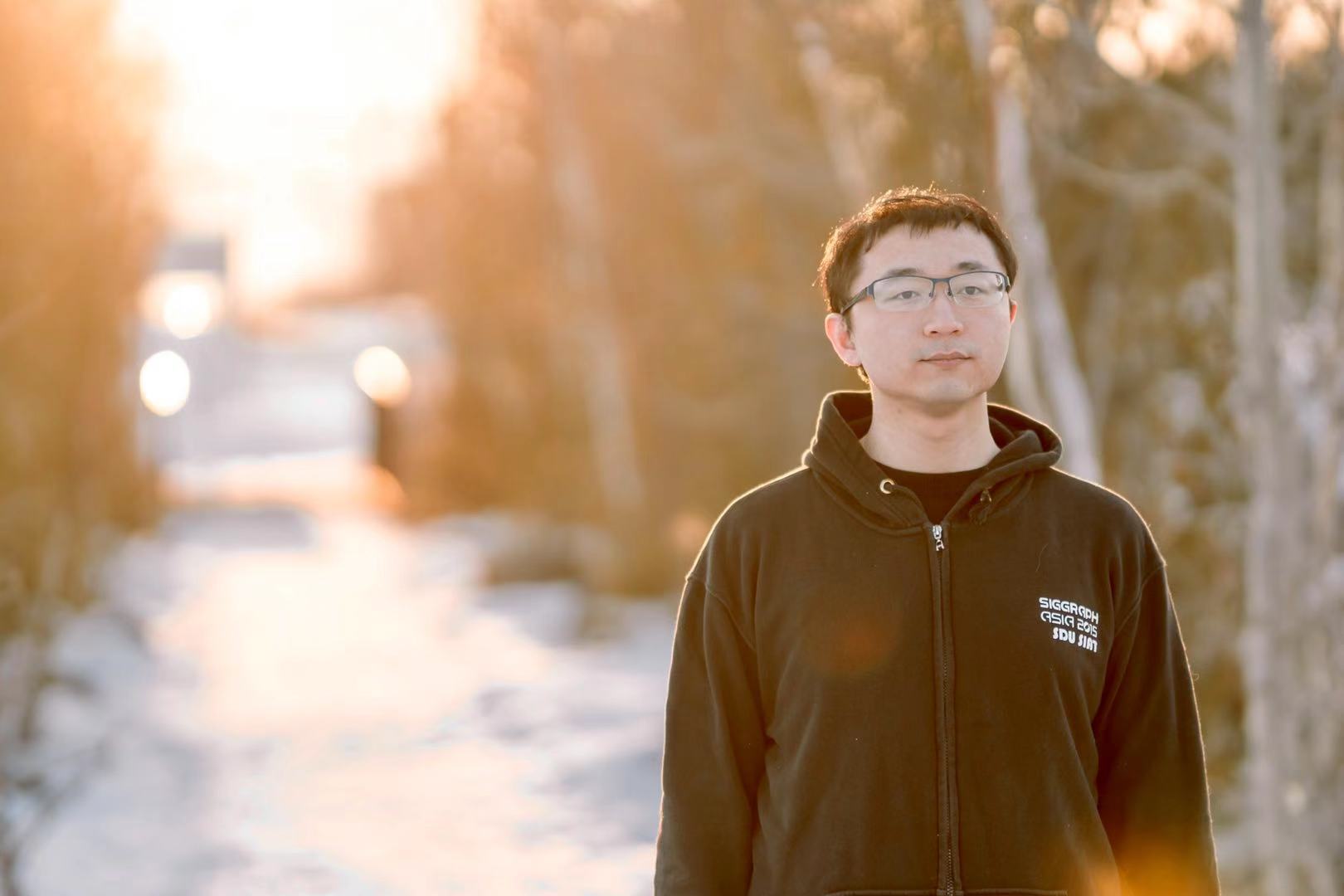
I'm a tenure-track Assistant Professor at Wangxuan Institute of Computer Technology, Peking University. My research focuses on computational photography, 3D vision, and spatial intelligence. Before joining Peking University, I was a Research Scientist at NVIDIA Toronto AI Lab. I earned my Ph.D. from the University of Toronto and received both my Master's and Bachelor's degrees from Shandong University. I am currently recruiting Ph.D. students and research interns. Please see the Hiring section below for details. Email / CV / Google Scholar / LinkedIn |
|
|
My research focuses on computational photography, 3D vision, and spatial intelligence. I aim to integrate 3D sensing and 3D representation with world models, in order to enable embodied agents to perceive, simulate, and interact with the physical world. |
|
[2026.07] One paper was accepted
to SIGGRAPH Asia.
[2026.07] One paper was accepted
to ACM MM.
[2026.06] Two papers were accepted
to ECCV.
[ more... ]
|
|
[2026]: One Ph.D. position (普博,2026.11录取,2027.09入学) available now, co-advised with Prof. Libin Liu. Robotic data-collection hardware, UMI and visuotactile background are preferred. [2027]: Three Ph.D. positions (直博,2027.09录取,2028.09入学) available, co-advised with Prof. Baoquan Chen. Background: (1) stereo or multi-view foundation models; (2) multimodal sensor fusion, especially LiDAR–camera fusion; and (3) efficient on-device AI models. I am also recruiting research interns for stays of at least three months. If you are interested, please send your CV and transcript to wenzhengchen@pku.edu.cn. (实验室非常欢迎校内外本科生、研究生前来实习或访问,请感兴趣的同学直接与我联系。) |
|
Full publication list in Google Scholar. |
| 2026 | |

|
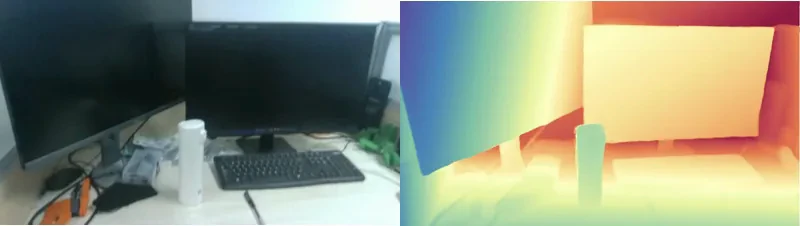
Technical Report arXiv, 2026 project page / arXiv / bibtex |
|
Jiaheng Li, Binsheng Zhang, Xinhai Chang, Wenzheng Chen# ACM MM, 2026 arXiv / bibtex |
|
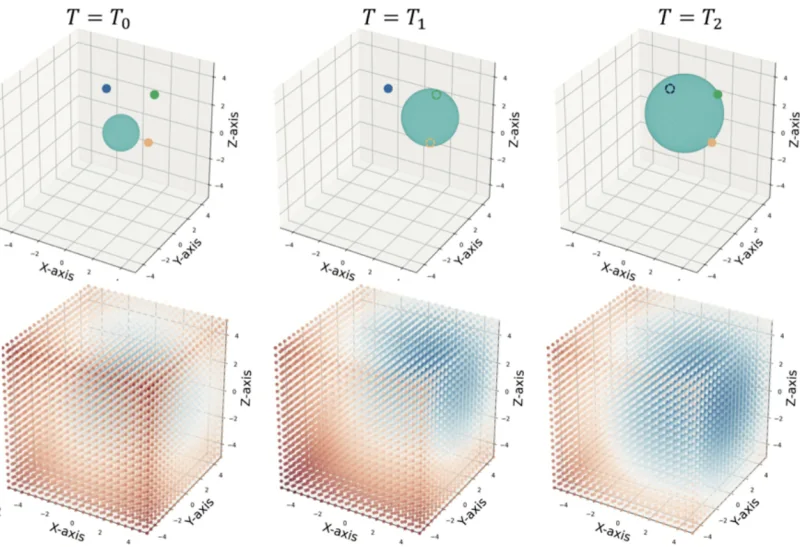
Chong Gao*, Kai Ye*, Qiyu Dai, Yiming Shao, Qiong Zeng, Ding Liang, Yanpei Cao, Guanbin Li, Wenzheng Chen# ECCV, 2026 poster / bibtex |
|
Yiming Shao*, Qiyu Dai*, Chong Gao, Guanbin Li, Yequan Wang, He Sun, Qiong Zeng#, Baoquan Chen, Wenzheng Chen# ECCV, 2026 project page / arXiv / bibtex |
|
|
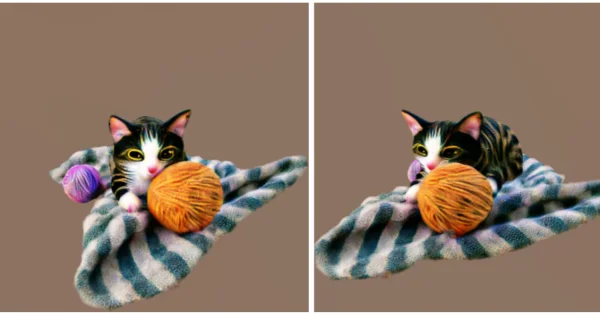
Weimin Bai, Yubo Li, Weijian Luo, Zeqiang Lai, Yequan Wang, Wenzheng Chen, He Sun# ICML, 2026 project page / arXiv / code / bibtex |
|
Fei Yu*, Yu Liu*, Luyang Tang, Mingchao Sun, Zengye Ge, Rui Bu, Yuchao Jin, Haisen Zhao, He Sun, Yangyan Li, Mu Xu#, Wenzheng Chen#, Baoquan Chen# CVPR Findings, 2026 project page / arXiv / bibtex |
|
|
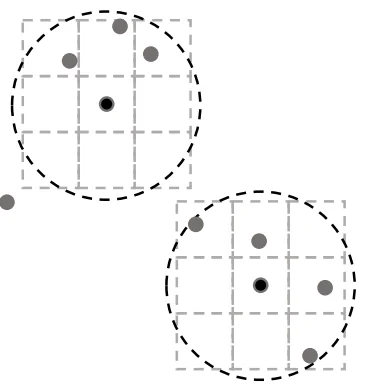
Lihan Li*, Haofeng Zhong*, Rui Bu, Mingchao Sun, Wenzheng Chen#, Baoquan Chen#, Yangyan Li# CVPR, 2026 arXiv / code / bibtex |
|
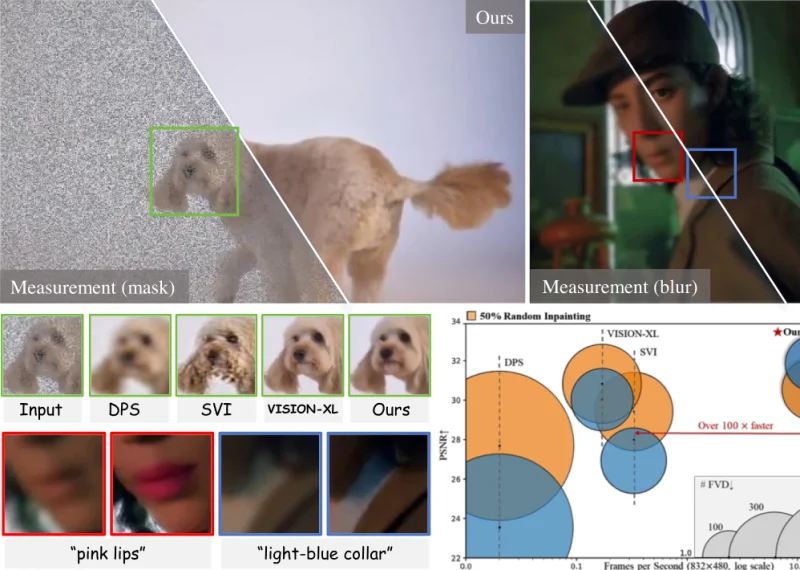
Weimin Bai, Suzhe Xu, Yiwei Ren, Jinhua Hao, Ming Sun, Wenzheng Chen, He Sun# CVPR, 2026 (Highlight Presentation) project page / arXiv / code / bibtex |
|
Qianfan Shen*, Ningxiao Tao*, Qiyu Dai*, Tianle Chen, Minghan Qin, Yongjie Zhang, Mengyu Chu#, Wenzheng Chen#, Baoquan Chen# ICLR, 2026 project page / arXiv / bibtex |
|
|
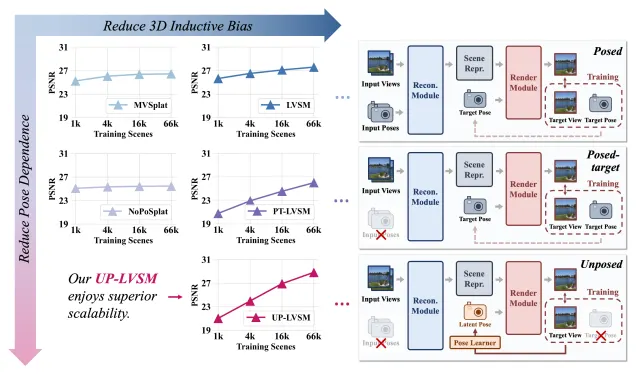
Haoru Wang*, Kai Ye*, Minghan Qin, Yangyan Li#, Wenzheng Chen#, Baoquan Chen# ICLR, 2026 project page / arXiv / code / bibtex |
| 2025 | |
|

Jiaheng Li*, Qiyu Dai*, Lihan Li, Praneeth Chakravarthula, He Sun, Baoquan Chen#, Wenzheng Chen# SIGGRAPH Asia, 2025 project page / arXiv / code / bibtex Neural single-shot Structured Light (NSL) achieves robust and high-fidelity 3D reconstruction from a single-shot structured light input. |
|
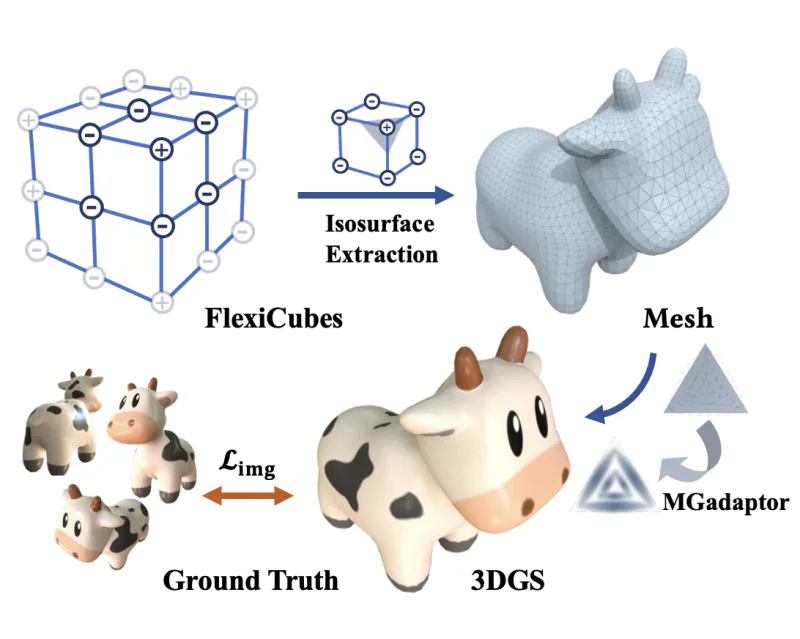
Kai Ye*, Chong Gao*, Guanbin Li, Wenzheng Chen#, Baoquan Chen# ICCV, 2025 project page / arXiv / code / bibtex GeoSplatting introduces a novel hybrid representation that grounds 3DGS with isosurfacing to provide accurate geometry and normals for high-fidelity inverse rendering. |
|
Qiyu Dai*, Xingyu Ni*, Qianfan Shen, Wenzheng Chen#, Baoquan Chen#, Mengyu Chu# CVPR, 2025 project page / arXiv / code (coming soon) / video / bibtex RainyGS integrates physics simulation with 3DGS to efficiently generate photorealistic, physically accurate, and controllable dynamic rain effects for in-the-wild scenes. |
|
| 2024 | |
|
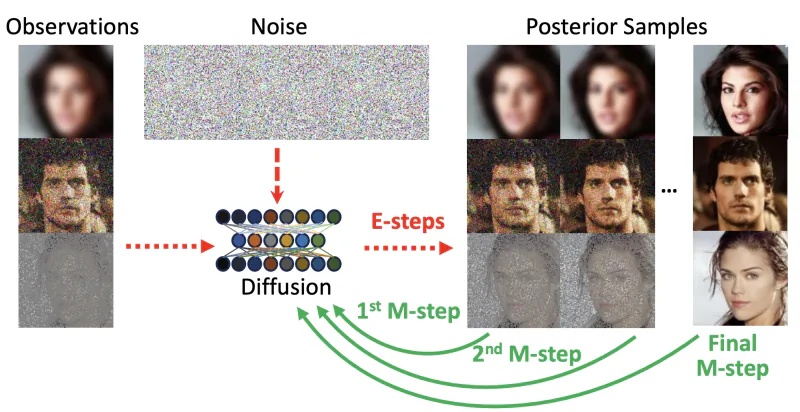
Weimin Bai, Yifei Wang, Wenzheng Chen, He Sun# (# Corresponding author) NeurIPS, 2024 project page / arXiv / code / bibtex EMDiffusion learns a clean diffusion model from corrupted data. |
|
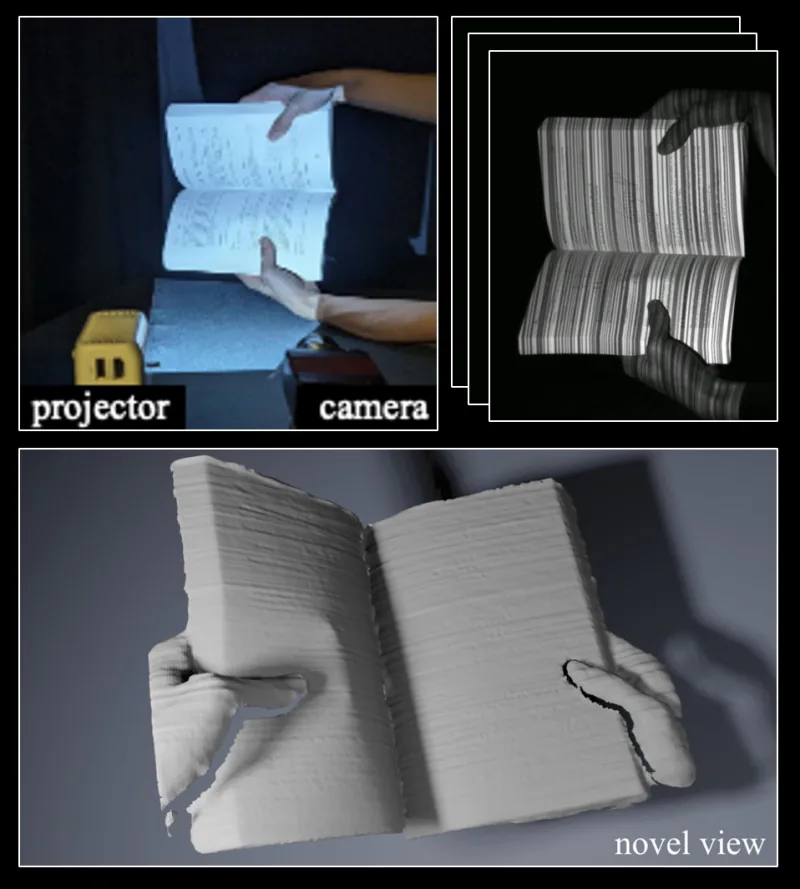
Parsa Mirdehghan, Maxx Wu, Wenzheng Chen, David B. Lindell, Kiriakos N. Kutulakos CVPR, 2024 project page / paper / video / code / bibtex TurboSL provides sub-pixel-accurate surfaces and normals at mega-pixel resolution from structured light images, captured at fractions of a second. |
|
Yuanxing Duan*, Fangyin Wei*, Qiyu Dai, Yuhang He, Wenzheng Chen#, Baoquan Chen# (* Equal contribution, # joint corresponding authors) ACM SIGGRAPH, 2024 project page / arXiv / code / bibtex |
|
| 2023 | |

|
Wenzheng Chen Ph.D. Thesis, 2023
|
|

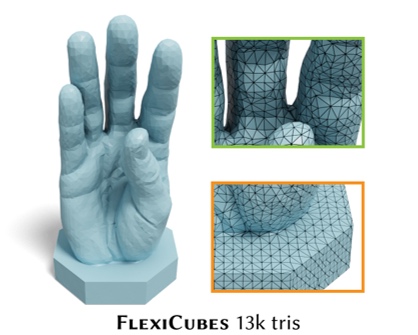
Tianchang Shen, Jacob Munkberg, Jon Hasselgren, Kangxue Yin, Zian Wang, Wenzheng Chen, Zan Gojcic, Sanja Fidler, Nicholas Sharp*, Jun Gao* ACM Transactions on Graphics (SIGGRAPH), 2023 project page / arXiv / code / video / bibtex
|
|

Zian Wang, Tianchang Shen, Jun Gao, Shengyu Huang, Jacob Munkberg, Jon Hasselgren, Zan Gojcic, Wenzheng Chen, Sanja Fidler CVPR, 2023 project page / arXiv / video / bibtex Combined with other NVIDIA technology, FEGR is one component of Neural Reconstruction Engine announced in GTC Sept 2022 Keynote. |
| 2022 | |
|

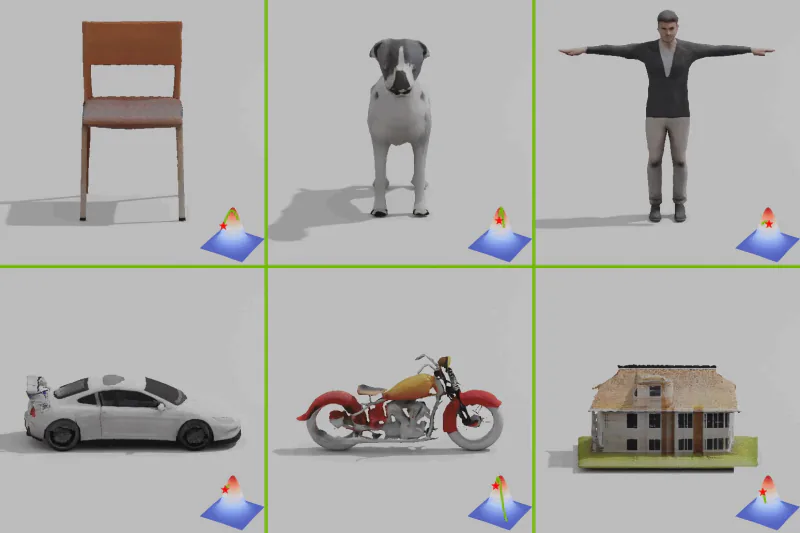
Jun Gao, Tianchang Shen, Zian Wang, Wenzheng Chen, Kangxue Yin, Daiqing Li, Or Litany, Zan Gojcic, Sanja Fidler NeurIPS, 2022 (Spotlight Presentation) project page / arXiv / code / video / bibtex / Two Minute Paper We develop a 3D generative model to generate meshes with textures, bridging the success in the differentiable surface modeling, differentiable rendering and 2D GANs. |
|
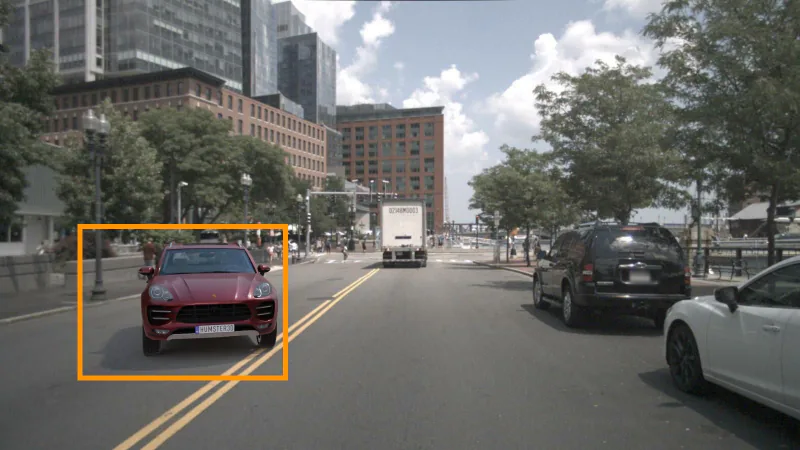
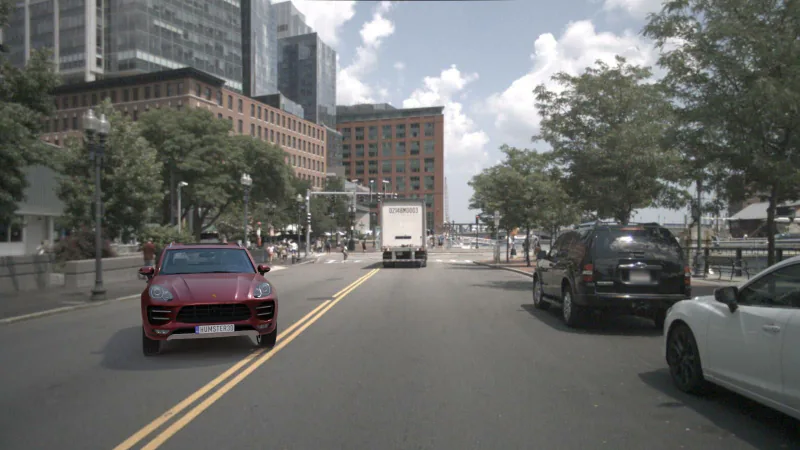
Zian Wang, Wenzheng Chen, David Acuna, Jan Kautz, Sanja Fidler ECCV, 2022 project page / arXiv / video / bibtex We propose a hybrid lighting representation to represent spatial-varying lighting for complex outdoor street scenes. |
|
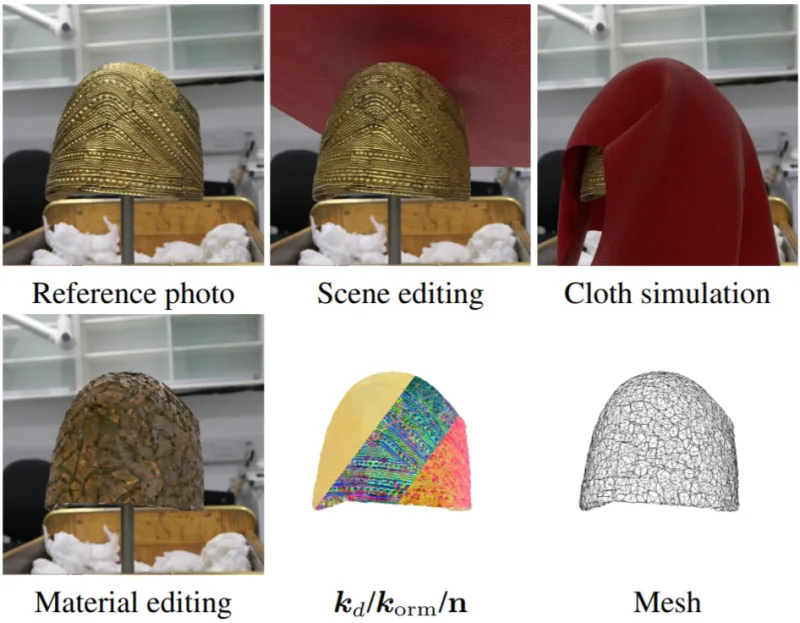
Jacob Munkberg, Jon Hasselgren, Tianchang Shen, Jun Gao, Wenzheng Chen, Alex Evans, Thomas Müller, Sanja Fidler CVPR, 2022 (Oral Presentation) project page / arXiv / code / video / bibtex / Two Minute Paper Nvdiffrec reconstructs 3D mesh with materials from multi-view images by combining diff surface modeling with diff renderer. The method supports Nvidia Neural Drivesim |
| 2021 | |
|
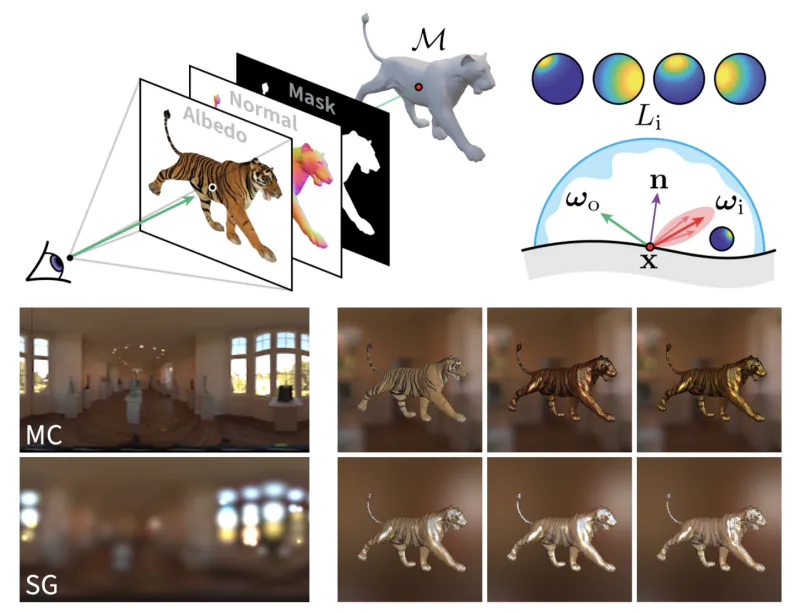
Wenzheng Chen, Joey Litalien, Jun Gao, Zian Wang, Clement Fuji Tsang, Sameh Khamis, Or Litany, Sanja Fidler NeurIPS, 2021 project page / arXiv / video / bibtex DIB-R++ is a highly performant differentiable renderer that combines rasterization and ray tracing and supports advanced lighting and material effects. We further embed it in deep learning and jointly predict geometry, texture, lighting, and material from a single image. |
|
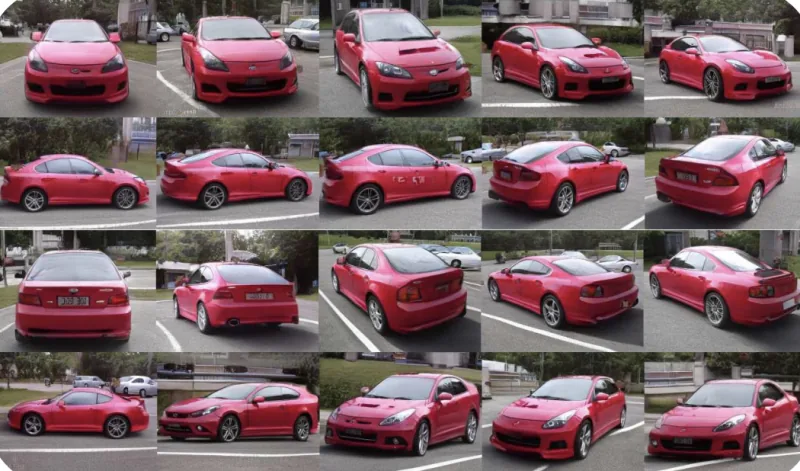
Yuxuan Zhang*, Wenzheng Chen*, Huan Ling, Jun Gao, Yinan Zhang, Antonio Torralba, Sanja Fidler (* Equal contribution) ICLR, 2021 (Oral Presentation) project page / arXiv / video / bibtex We explore StyleGAN as a multi-view image generator and train inverse graphics from StyleGAN images. Once trained, the inverse graphics model further helps disentangle and manipulate StyleGAN latent code from graphics knowledge. Our work was featured at NVIDIA GTC 2021 and has become an Omniverse product. |
| 2020 | |
|
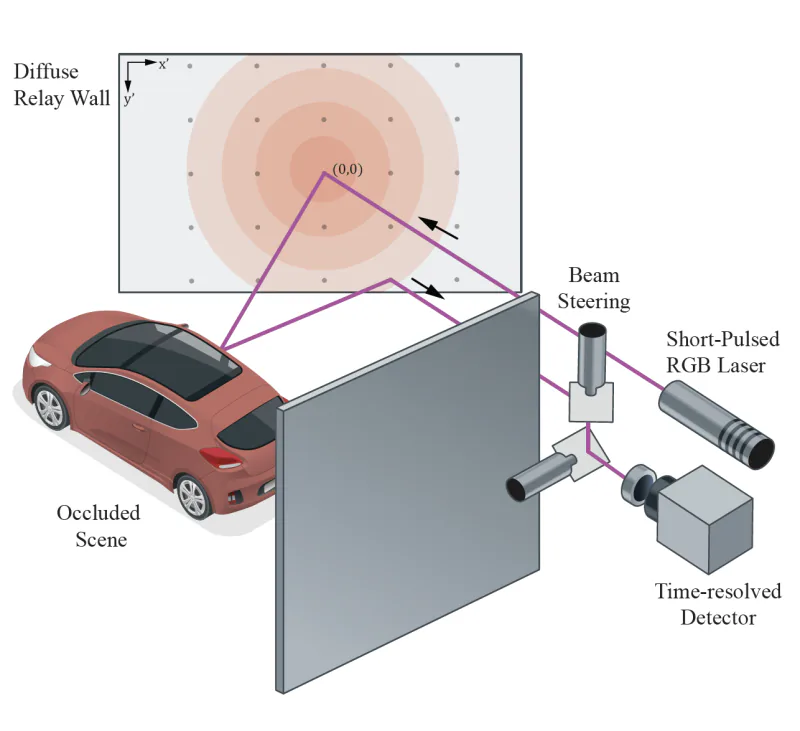
Wenzheng Chen*, Fangyin Wei*, Kyros Kutulakos, Szymon Rusinkiewicz, Felix Heide (* Equal contribution) SIGGRAPH Asia, 2020 project page / paper / code / bibtex We propose to learn feature embeddings for non-line-of-sight imaging and recognition by propagating features through physical modules. |
|
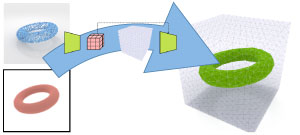
Jun Gao, Wenzheng Chen, Tommy Xiang, Alec Jacobson, Morgan McGuire, Sanja Fidler NeurIPS, 2020 project page / arXiv / code / video / bibtex We predict deformable tetrahedral meshes from images or point clouds, which support arbitrary topologies. We also design a differentiable renderer for tetrahedra, allowing 3D reconstruction from 2D supervision only. |
|
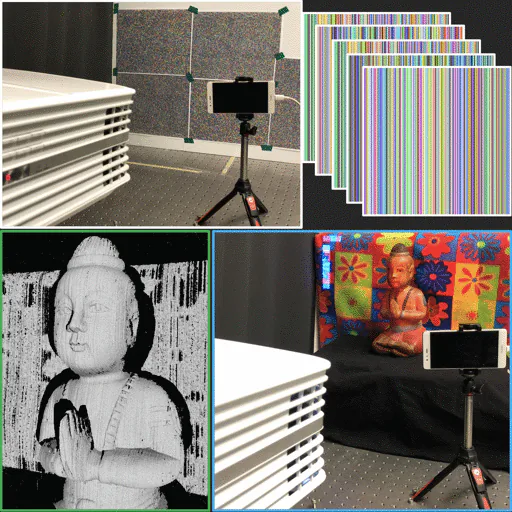
Wenzheng Chen*, Parsa Mirdehghan*, Sanja Fidler, Kyros Kutulakos (* Equal contribution) CVPR, 2020 (Follow-up work: ICCP 2021 Best Poster Award) project page / paper / video / bibtex We present optical SGD, a computational imaging technique that allows an active depth imaging system to automatically discover optimal illuminations & decoding. |
| 2019 | |
|
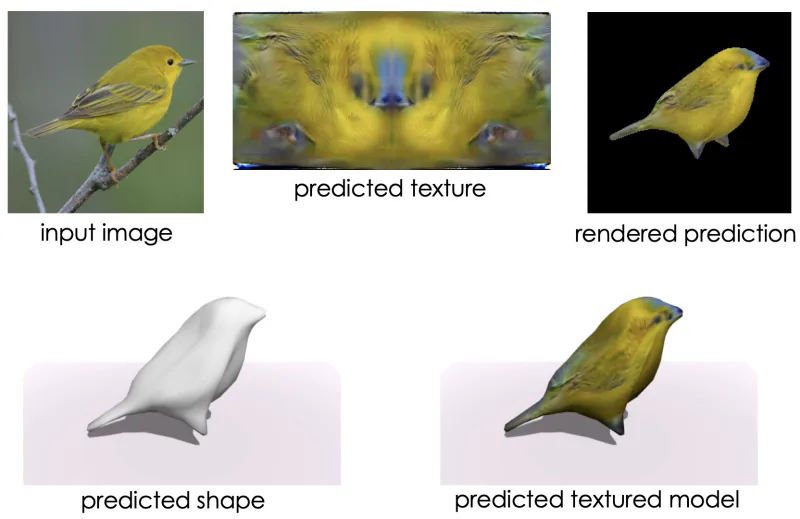
Wenzheng Chen, Jun Gao*, Huan Ling*, Edward J. Smith*, Jaakko Lehtinen, Alec Jacobson, Sanja Fidler (* Equal contribution) NeurIPS, 2019 project page / arXiv / code / bibtex / Two Minute Paper An interpolation-based differentiable 3D mesh renderer that supports vertex positions, vertex colors, multiple lighting models, and texture mapping, and can be easily embedded in neural networks. |
|
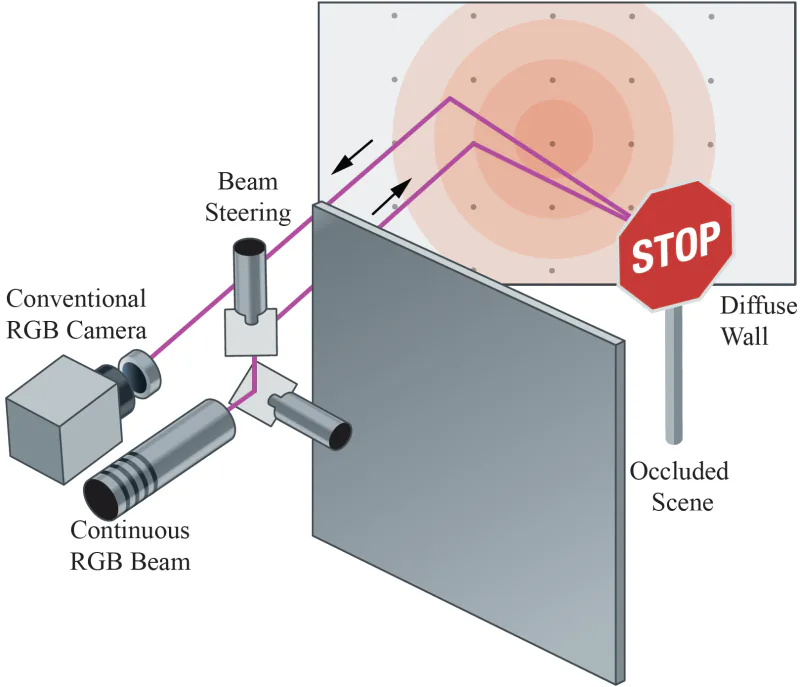
Wenzheng Chen, Simon Daneau, Fahim Mannan, Felix Heide CVPR, 2019 (Oral Presentation) project page / arXiv / code / bibtex We show that hidden objects can be recovered from conventional images instead of transient images. |
|
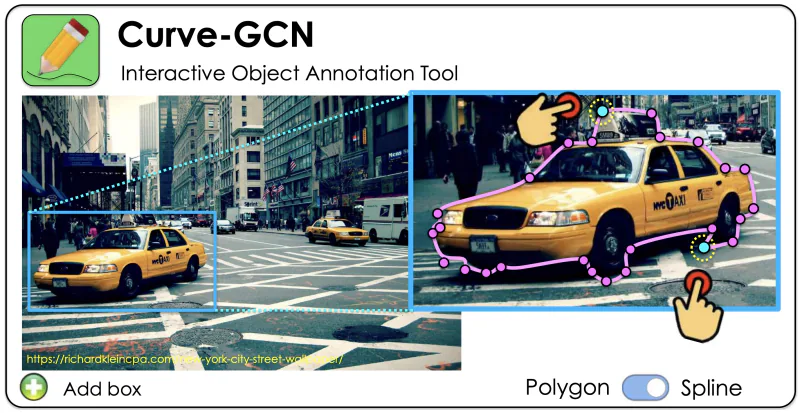
Huan Ling*, Jun Gao*, Amlan Kar, Wenzheng Chen, Sanja Fidler (* Equal contribution) CVPR, 2019 project page / arXiv / code / bibtex We predict object polygon contours from graph neural networks, where a novel 2D differentiable rendering loss is introduced. It renders a polygon contour into a segmentation mask and backpropagates the loss to help optimize the polygon vertices. |
| 2018 | |
|
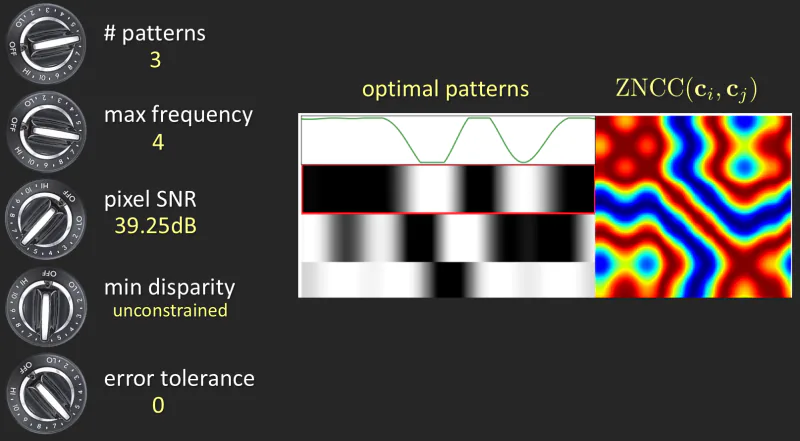
Parsa Mirdehghan, Wenzheng Chen, Kyros Kutulakos CVPR, 2018 (Spotlight Presentation) project page / paper / code (by request) / bibtex À La Carte designs structured-light patterns from a machine-learning perspective, where patterns are automatically optimized by minimizing the disparity error under any given imaging condition. |
| 2016 | |

|
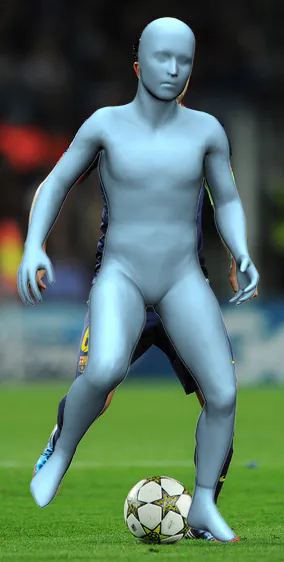
Wenzheng Chen, Huan Wang, Yangyan Li, Hao Su, Zhenhua Wang, Changhe Tu, Dani Lischinski, Daniel Cohen-Or, Baoquan Chen 3DV, 2016 (Oral Presentation) project page / arXiv / code / bibtex 3D pose estimation using a model trained with synthetic data and domain adaptation. |
|
Template adapted from Jon Barron. |